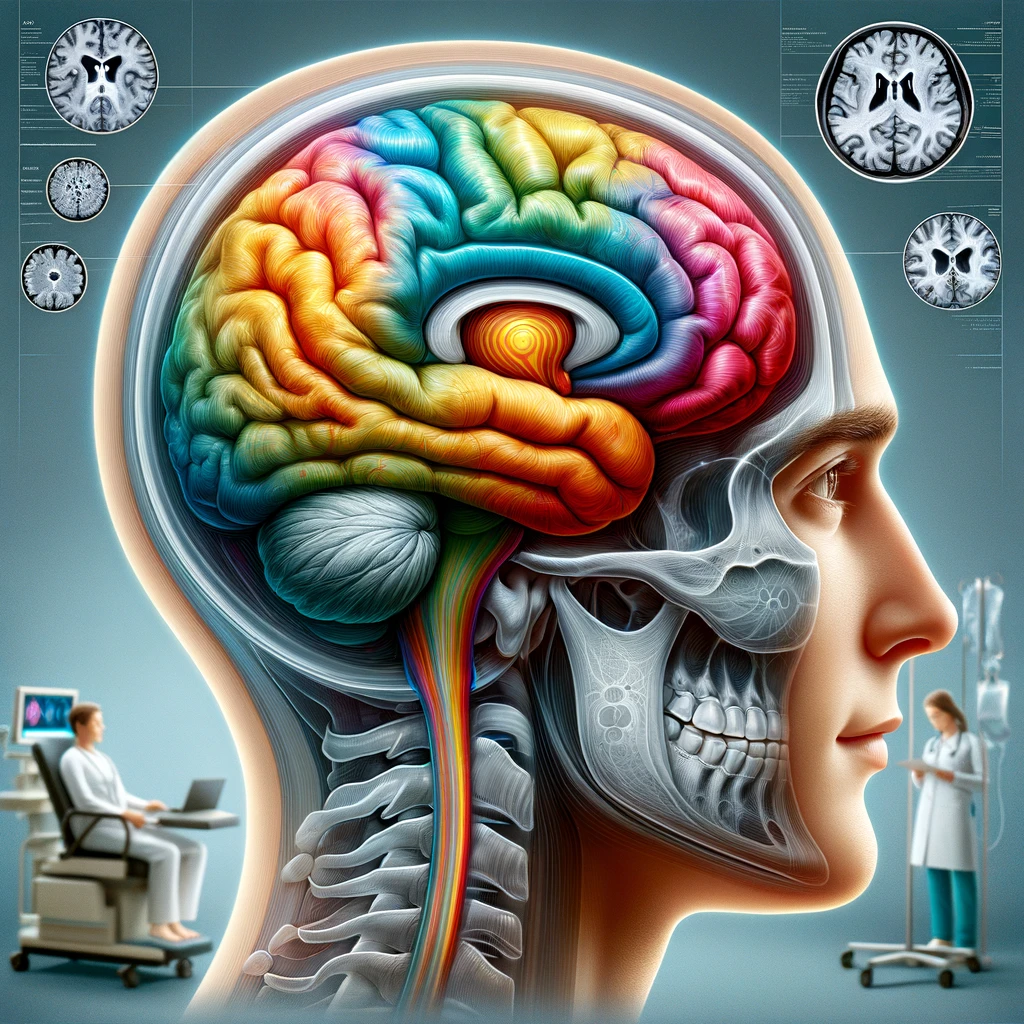

- Understanding functional neurological disorder
- Types of visual aids and their effectiveness
- Designing visuals for clarity and engagement
- Integrating visual aids into educational settings
- Evaluating the impact on learner outcomes
Functional neurological disorder (FND) refers to a condition where patients experience neurological symptoms, such as weakness, abnormal movements, or non-epileptic seizures, without a clear structural cause in the nervous system. These symptoms are very real and can be as debilitating as those caused by neurological diseases with identifiable pathology. However, the lack of a structural explanation can create challenges in diagnosis, understanding, and treatment, both for health professionals and for patients themselves.
FND is increasingly recognised as a disorder of brain function rather than damage, and recent advances have highlighted the complex interaction between psychological, neurological, and social factors in its development. Raising awareness about these interactions is fundamental to reducing the stigma that often surrounds the condition. Due to its complex nature, FND can be difficult for learners to conceptualise, making it essential to use education materials that simplify and clarify the underlying mechanisms.
Visual tools play a critical role in making these mechanisms more understandable. Diagrams, animations, and symptom flowcharts, for example, can demonstrate how dysfunction in the brain’s communication networks can produce varied symptoms. These aids help bridge gaps in comprehension, especially when teaching audiences who may have limited prior knowledge of neuroscience. By fostering a clearer understanding of how symptoms arise, visual tools support both the educational process and broader public awareness campaigns.
For individuals learning about FND—whether they are medical students, patients, or general audiences—the abstract nature of the disorder can often lead to misconceptions. Visual explanations not only counteract these misconceptions but also provide a platform for empathy by showing how real and impactful the symptoms can be. In that context, awareness is not simply about information, but about cultivating understanding and respect for those living with FND.
Types of visual aids and their effectiveness
Various types of visual aids can be effectively employed to deepen understanding of FND, catering to diverse learning styles and enhancing overall engagement. Among the most commonly used tools are infographics, diagrams, animations, videos, and interactive models. Each of these offers distinct advantages when communicating complex neurological concepts in a simplified and accessible manner.
Infographics are particularly useful for summarising key information in a concise, visually appealing format. They can break down the mechanisms of FND, illustrating the interaction between brain functions and symptoms. For example, a visual comparison between a healthy neural communication pathway and one disrupted by FND can provide immediate clarity. Complex clinical terminology can be demystified through the combination of text and imagery, making them highly suitable for patient education as well as academic instruction.
Animations and videos are equally impactful, especially when demonstrating dynamic processes such as motor symptoms or non-epileptic seizures. Visual motion can replicate the unpredictability and variability of FND symptoms, offering insight into what patients experience. For learners unfamiliar with such presentations, this form of visual aid can generate both understanding and empathy. Videos that include expert explanations alongside animated sequences often help reinforce key concepts and serve as engaging education materials for various audiences.
Diagrams, such as flowcharts and brain maps, provide structured representations of symptom triggers, neural responses, and behavioural feedback loops associated with FND. They allow for analytical exploration, making them ideal for medical students or health professionals who benefit from logical, step-by-step interpretation. When paired with patient case studies, these visual tools deepen contextual learning and support clinical reasoning.
Interactive models and digital applications offer a more hands-on approach by allowing users to manipulate elements and receive instant feedback. These tools are well-suited to formal learning environments and can be integrated into e-learning platforms or classroom settings. Their interactivity not only increases engagement but also supports retention by encouraging active exploration of content. They can be tailored for both beginners and advanced learners, reinforcing key messages about FND through repetition and variation.
The effectiveness of these visual aids lies in their ability to translate abstract, often misunderstood phenomena into tangible, relatable concepts. When strategically selected and thoughtfully designed, they contribute significantly to awareness and learning outcomes. By presenting FND in a visually compelling and accurate manner, these aids help dismantle misconceptions and promote a comprehensive understanding of the disorder across multiple audiences.
Designing visuals for clarity and engagement
Creating visuals that communicate clearly and engage effectively requires careful consideration of both design principles and the unique aspects of functional neurological disorder. FND often involves complex neurological processes that are not intuitively understood, so visuals must simplify without oversimplifying. This balance is achieved through thoughtful use of colour, layout, language, and symbolic representation. For instance, using neutral and calming colours can help prevent any unintended emotional impact, while also supporting the sensitive nature of FND-related symptoms.
Clarity in visual tools is essential to avoid further confusion. Labels, icons, and explanatory text should be concise and free from jargon, especially when visuals are used in public awareness campaigns or patient-focused education materials. When targeting medical professionals or students, more technical terminology can be included—but always alongside clear definitions. Designers should also use consistent imagery throughout a series of visuals to reinforce learning and reduce the cognitive load required to interpret each new diagram or chart.
Engagement can be fostered by incorporating narrative elements into visuals, such as short case-based scenarios or animated sequences that follow a fictional patient’s journey. This technique helps to humanise FND and create empathy while still conveying clinical information. Visual storytelling supports the emotional and intellectual engagement of the viewer, making learning more memorable and impactful. Additionally, motion graphics or transition effects in digital formats can enhance user interaction without causing distraction when properly moderated.
Accessibility should also be a primary design consideration. Visual tools must accommodate different levels of visual literacy and cognitive ability. For instance, using high-contrast elements improves readability for those with vision impairments, and avoiding overly complex layouts ensures that learners with cognitive or attention challenges can still grasp the core messages. Designers should seek feedback from representative users, including those with lived experience of FND, to ensure the visuals are inclusive and effective across diverse audiences.
Charts and diagrams that visually map the brain-body connection should be especially clear, as misunderstanding this relationship is often a barrier to accurate comprehension of FND. For example, a visual showing how stress or trauma can disrupt neural signalling pathways could combine real anatomical images with symbolic arrows and highlighted regions. Such integrated visual formats support deeper understanding by linking emotional states with physical symptoms in a logical, accessible way.
Iterative development is key; visuals should be tested and refined based on the reactions and comprehension levels of target audiences. Educators and healthcare professionals should collaborate with graphic designers to ensure content accuracy and user-friendliness. When designed with clarity and engagement as guiding principles, visual tools become not just educational aids, but powerful mechanisms for building awareness and sensitivity around functional neurological disorder.
Integrating visual aids into educational settings
Successfully integrating visual tools into educational settings requires a strategic approach that aligns content with the learning environment and audience needs. Whether the setting is a university lecture hall, a public awareness seminar, or a clinical training session, the goal is to present complex information about FND in a way that is accessible, engaging, and meaningful. Educators must first assess the context in which their education materials will be deployed and tailor visual aids accordingly, considering factors such as audience background, available time, and technological resources.
In formal academic settings such as medical schools or nursing programmes, instructors can utilise comprehensive slide decks that incorporate diagrams, flowcharts, and animations to elucidate key concepts. These visual tools enable educators to present layered information step by step, facilitating cumulative learning. By embedding interactive case studies or video simulations depicting real or representative FND scenarios, learners develop both diagnostic insight and empathy. Incorporating short quizzes or reflective discussions alongside visuals can further reinforce understanding.
In community education or awareness campaigns, integration of visual aids must prioritise simplicity and impact. Posters, pamphlets, and animated infographics can distil essential facts about FND into clear, attention-grabbing formats. These formats are especially effective in waiting rooms, health fairs, or online information hubs. Visual storytelling, such as illustrated testimonials or animated journeys through a diagnosis and recovery process, is particularly powerful for building a connection with a general audience unfamiliar with medical terminology.
The digital classroom offers another opportunity for effective integration. E-learning platforms allow for the embedding of videos, drag-and-drop quizzes, and interactive charts within modular lessons. Teachers and trainers can track learner progress and adjust the level of visual support accordingly. For remote or hybrid learning environments, including captioned videos and downloadable visual materials ensures that learners with different needs and schedules can access and review the content as needed. In professional development contexts, such features support ongoing education and the practical application of knowledge.
Collaborative learning methods can also benefit from visual aids. Small-group exercises where learners interpret a brain circuit diagram or discuss patient symptom pathways using structured visuals help solidify concepts through dialogue. In simulated clinical settings, augmented reality or tablet-based visual tools can allow participants to explore symptom manifestations and treatment options in a controlled, experiential way. When learners engage hands-on with education materials that represent real-world FND complexities, their retention and comprehension are significantly enhanced.
Importantly, the successful integration of these resources depends on instructor confidence and training. Educators may require guidance on best practices for using visual tools effectively, including pacing, explanation, and audience interaction. Workshops or instructional guides for educators can foster consistency and quality in how FND is taught across disciplines and institutions. Ensuring that education materials are validated by clinicians and individuals with lived FND experience adds authenticity and relevance to the content being presented.
By thoughtfully embedding visual aids within diverse educational settings, educators not only improve comprehension but also foster greater awareness of FND. Engaged learners are more likely to retain information, apply it accurately in practice, and communicate it effectively to others, thereby contributing to broader societal understanding and acceptance of functional neurological disorder.
Evaluating the impact on learner outcomes
Measuring the effectiveness of visual tools in educating about FND requires structured evaluation methods that capture changes in knowledge, attitudes, and practical application. Pre- and post-intervention assessments are among the most widely used strategies, allowing educators to determine whether learners have gained a more accurate understanding of functional neurological disorder. These assessments can range from multiple-choice quizzes and reflective writing exercises to confidence ratings on diagnosis or patient communication skills. When tailored to the content of the visual tools used, such evaluations provide direct insight into how successfully the materials have conveyed key messages.
Evaluators should consider using qualitative methods alongside quantitative approaches. Focus groups, interviews, and open-ended surveys can reveal how learners perceive the visuals, what concepts remain unclear, and which aspects of the education materials improved their engagement. Comments on visual clarity, relatability, and emotional impact are particularly helpful in refining content to better align with learner needs. In medical settings, feedback from trainees about how visual aids supported their clinical reasoning or patient empathy can offer valuable indicators of long-term educational value.
To assess the broader impact on awareness and attitudes, tools such as Likert-scale questionnaires can be implemented to examine shifts in perceptions of FND before and after exposure to visual education materials. These tools are instrumental in addressing stigma, a significant barrier to FND understanding. For public and patient audiences, measurable outcomes might include increased recognition of FND symptoms, greater openness to seeking medical care, or enhanced empathy towards those affected. Indicators such as increased website traffic to FND resources, longer engagement times with digital content, or social media interactions can also reflect shifts in awareness driven by visual campaigns.
In professional development settings, longer-term indicators can evaluate how well learning translates into practice. Follow-up surveys, observation during clinical simulations, or real-world assessments of diagnostic accuracy and patient interaction can provide deeper analysis. Where possible, visual tools should be linked to key performance outcomes, such as improved communication with patients who have FND or a reduction in unnecessary tests due to better recognition of functional symptoms. These data support the continued investment in visual education strategies as part of formal FND curricula.
Evaluating the inclusivity and accessibility of visual tools is also vital. Audit checks can determine whether visuals meet standards for readability, cultural sensitivity, and usability for people with disabilities. Additionally, tracking engagement across diverse demographic groups can help to ensure that educational resources are not inadvertently excluding any subset of learners. Iterative testing with target user groups, including individuals with lived experience of FND, helps educators ensure that visuals not only inform but also resonate with audiences in a respectful and empowering way.
Ultimately, ongoing evaluation supports the refinement and effectiveness of education materials. With evidence-based feedback, developers can adjust visual content to better suit learning objectives and audience needs. In the context of FND, where misconceptions and stigma are common, ensuring the impact of visual tools is not just a matter of pedagogical success—it is a key strategy in building meaningful awareness and understanding within both clinical and public domains.